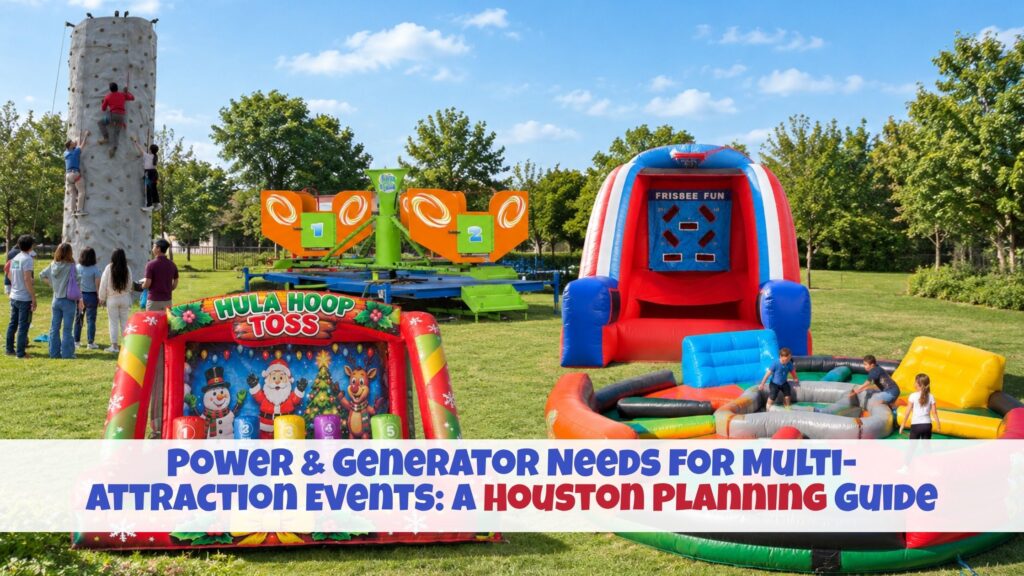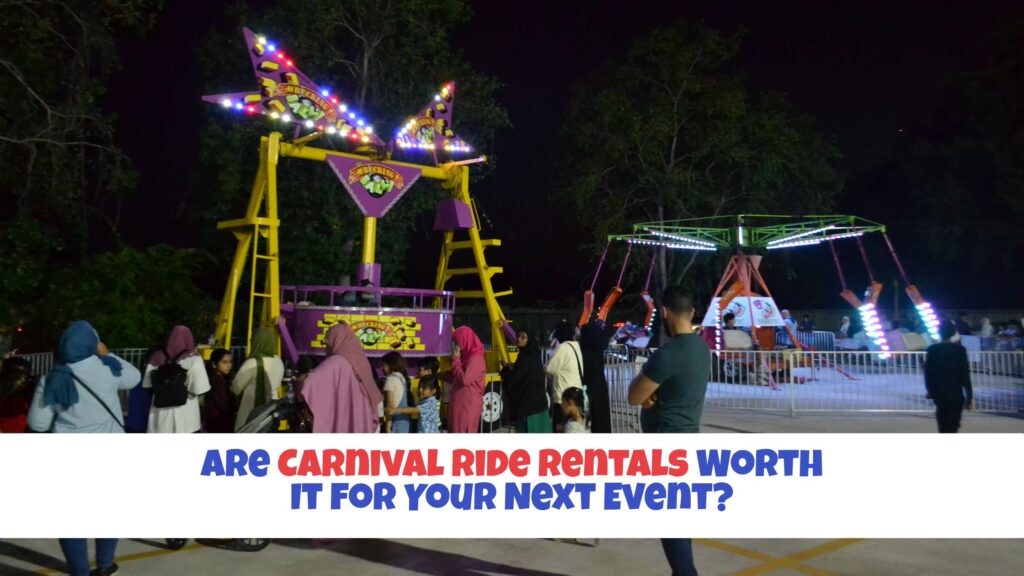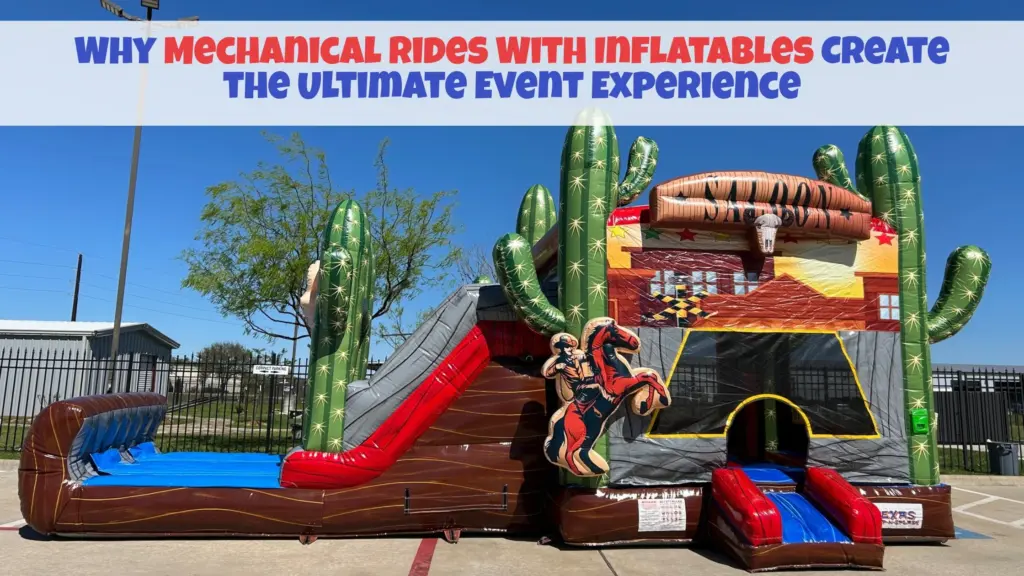
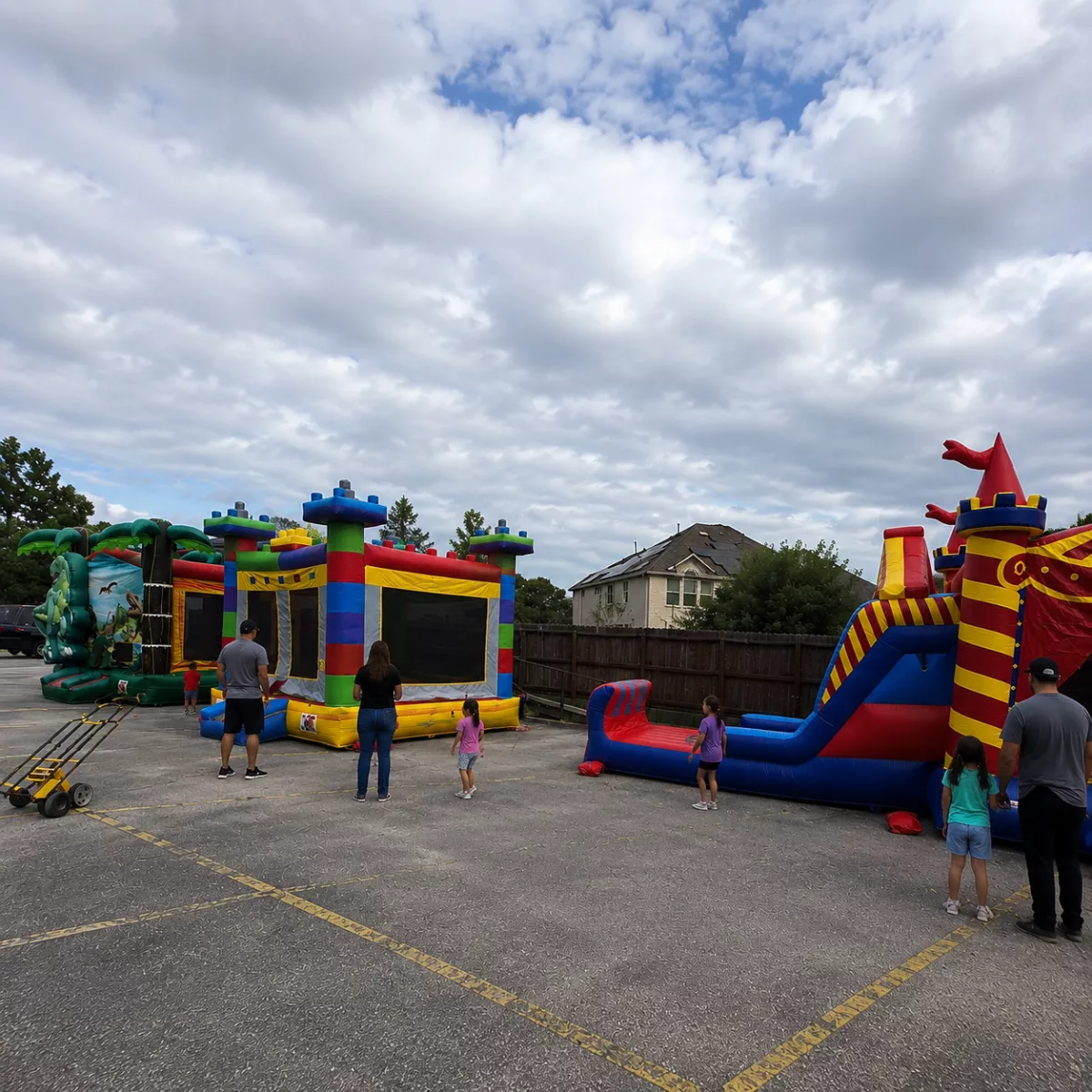
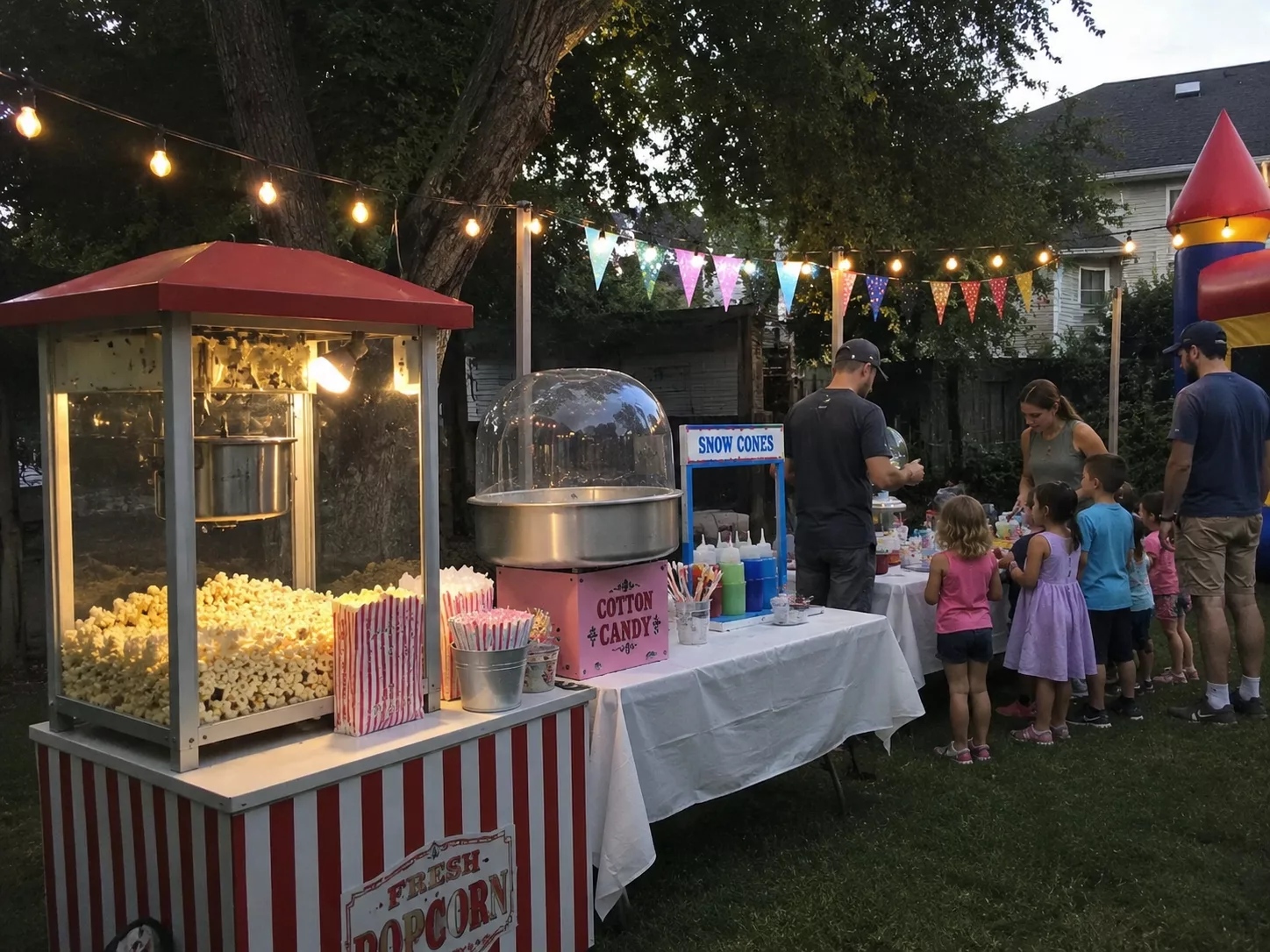

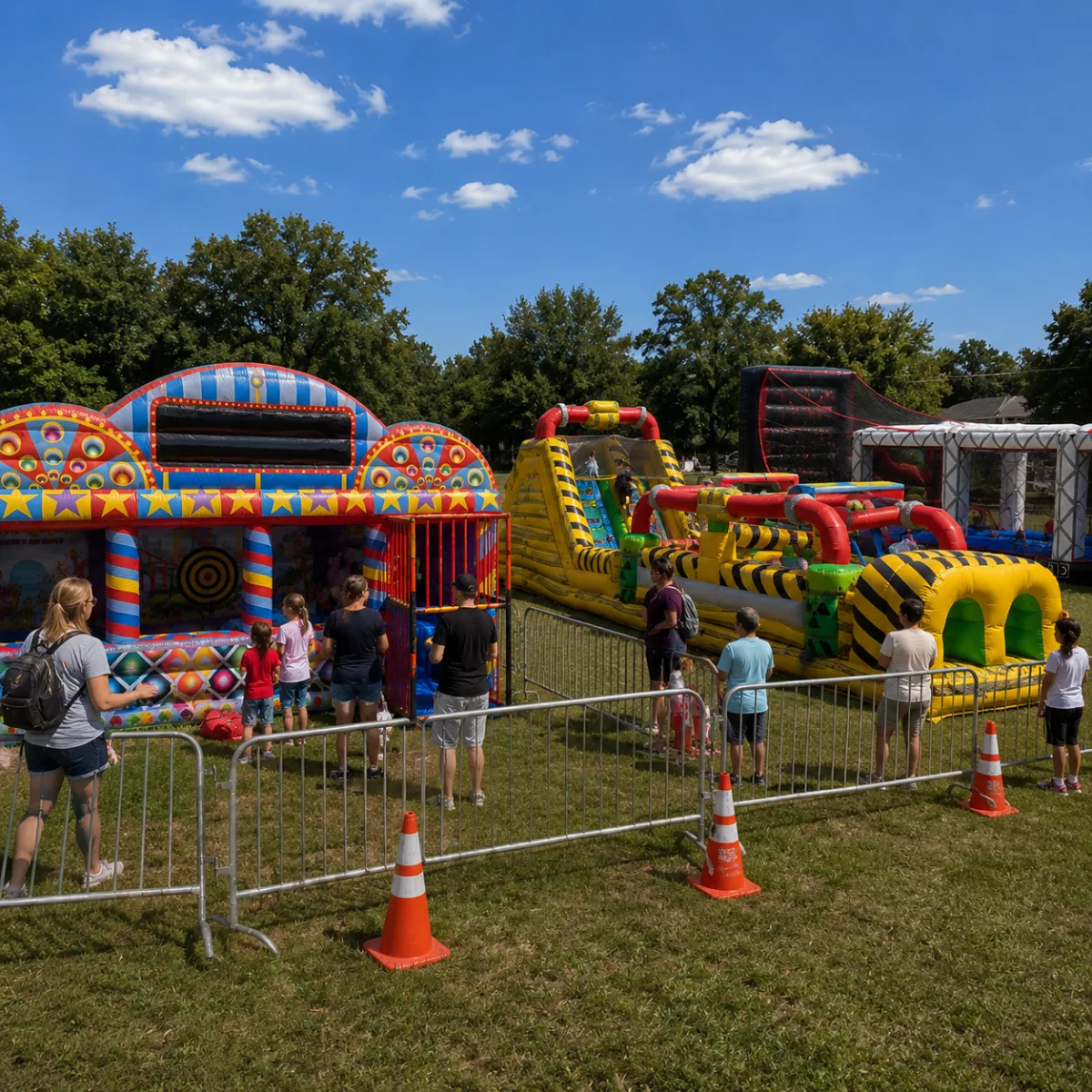
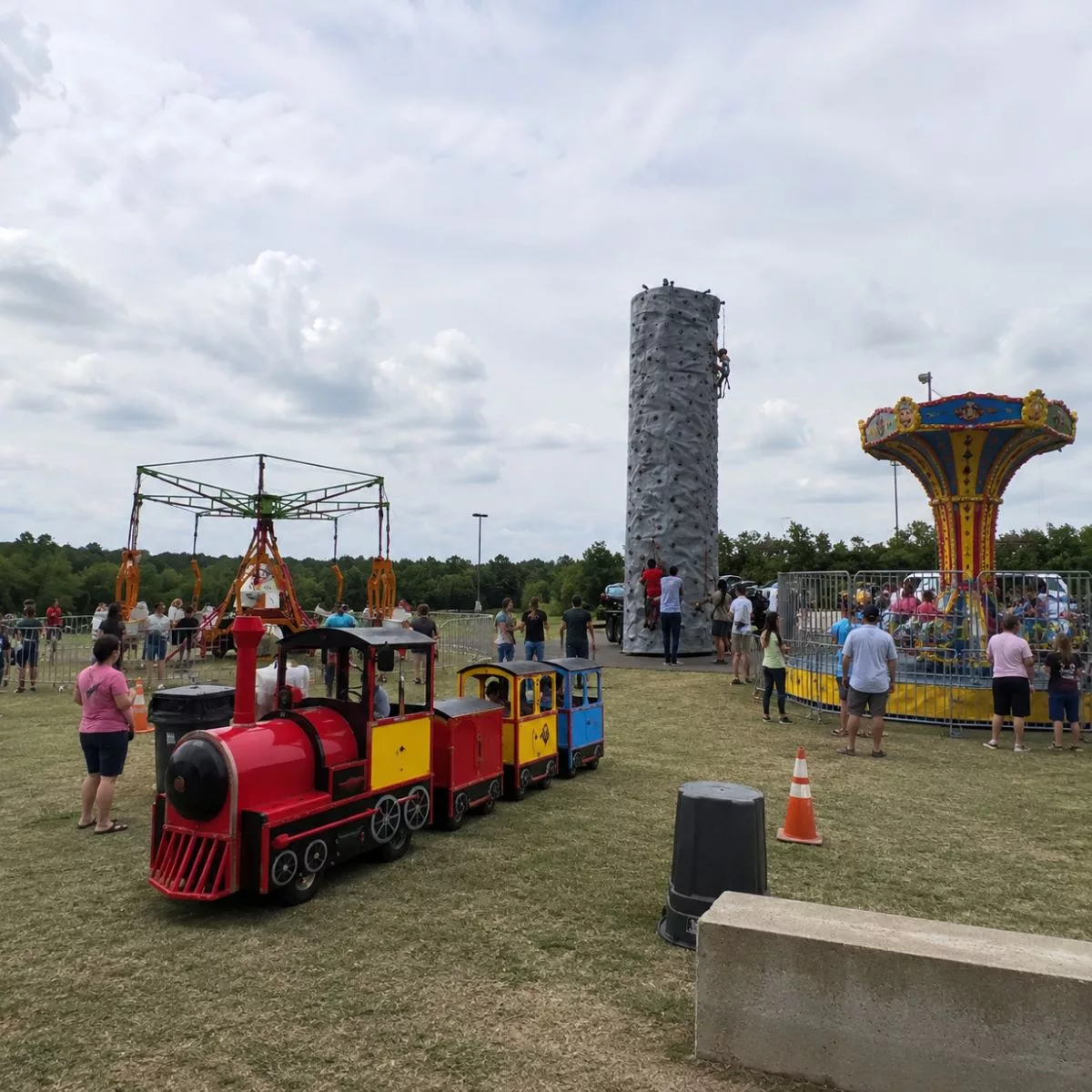
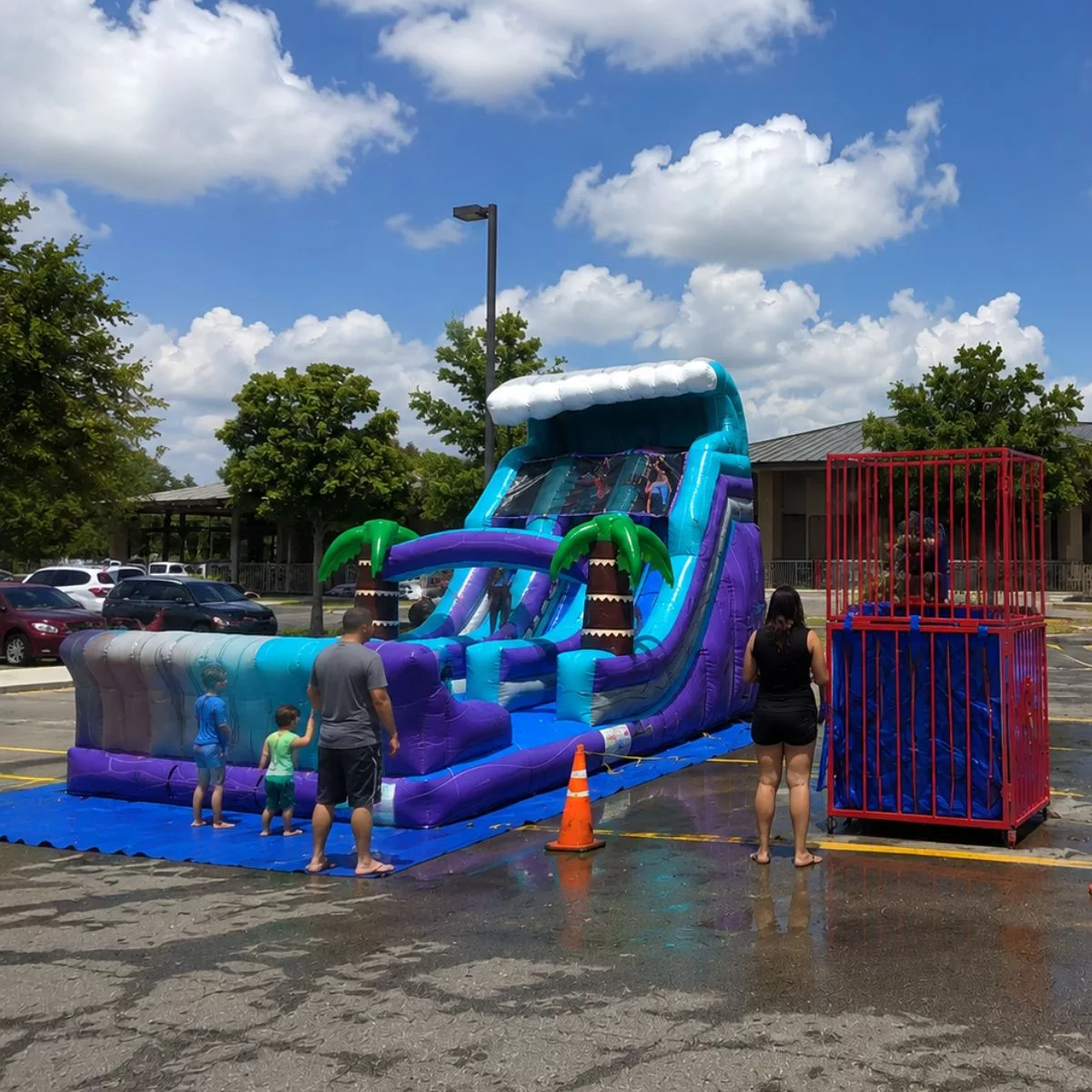
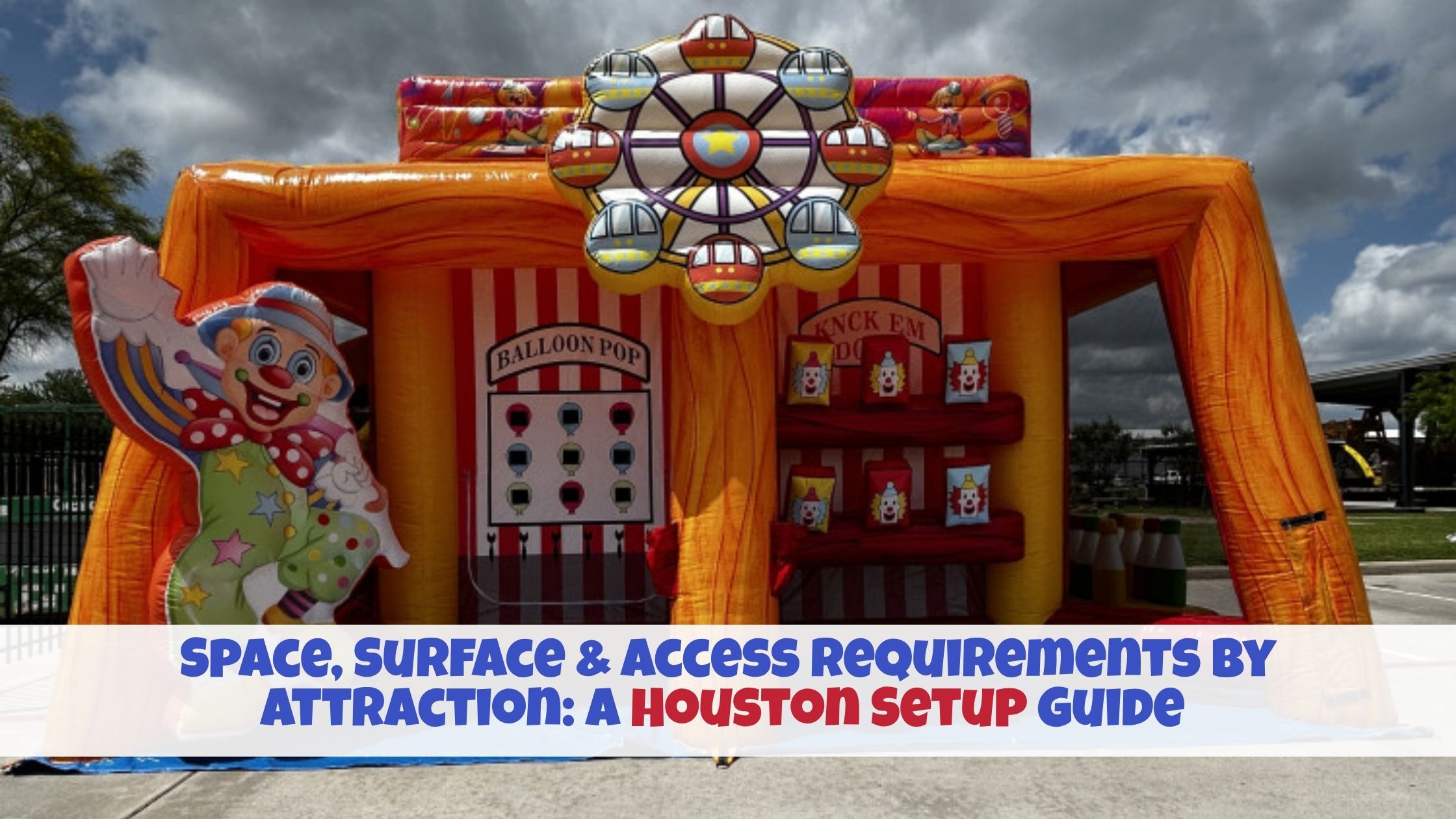
The width for carnival rides is much larger than a bounce house footprint. Most rides need a wide, level area plus a clear buffer and open space overhead. The surface requirements for a bounce house are simpler: flat grass, or firm hard ground with sandbags, and about 3 feet of clearance on every side. Either way, you need a 36-inch path in. Check the listed size for your exact rental before you pick a spot.
Picture this. The truck pulls up. The kids are buzzing. Then the crew looks at your yard, sees a slope, a low branch and a narrow gate, and shakes their heads.
It happens a lot. And it’s almost always fixable if you know the rules ahead of time.
This guide is the deeper dive behind our site and power requirements post. We cover the width for carnival rides, the surface requirements for a bounce house, and the access rules for everything in between.
Start With the Space, Not the Ride
Pick the attraction after you know your space. Not before.
Walk your yard with a tape measure. Note the widest open patch, the height of the tree branches, and any wires overhead. Then compare those numbers to the size listed for each rental. Our party rental setup guide walks through this step by step.
A good rule for any inflatable: take the unit’s size and add 3 feet on every side. That gap gives the crew room for stakes and the blower. It also gives kids a safe place to step on and off.
Width for Carnival Rides: Plan Bigger Than You Think
Here’s where people get caught out. A mechanical ride isn’t a bigger bounce house. It’s a different animal.
Rides swing, spin or lift. So the width for carnival rides on the product page is only part of the picture. You also need a clear zone around the ride, a line for guests to wait in, and space for the operator. That means the footprint is often far wider than a standard bounce house, and it can be a lot wider.
Height matters too. Our climbing rock wall stands 24 feet tall. The bungee trampoline lets riders jump as high as 25 feet. Neither one works under a tree limb or a power line.
Browse our full carnival ride rentals and check the listed width for each one. If the numbers are close, call us. We’d rather help you measure than turn a truck around.
Surface Requirements for a Bounce House
Grass is the easy one. Stakes go straight in and hold the unit for the whole event. Mowed, flat grass with no rocks or roots is the best case.
Concrete and asphalt work too. We just swap stakes for sandbags or water barrels. Those take up room, so leave a bit of extra space around the unit.
Gravel, mulch and loose dirt fail the test. Stakes won’t hold in them. Sloped ground fails as well, since the unit can lean or shift once kids climb in.
One more tip. Sprinkler heads and buried lines sit right where stakes want to go. Mark them before delivery day. Not sure your yard meets the bounce house surface requirements? Send us a photo when you book. It takes a minute and it saves the whole morning.
Our bounce house and combo rentals all follow these ground rules.
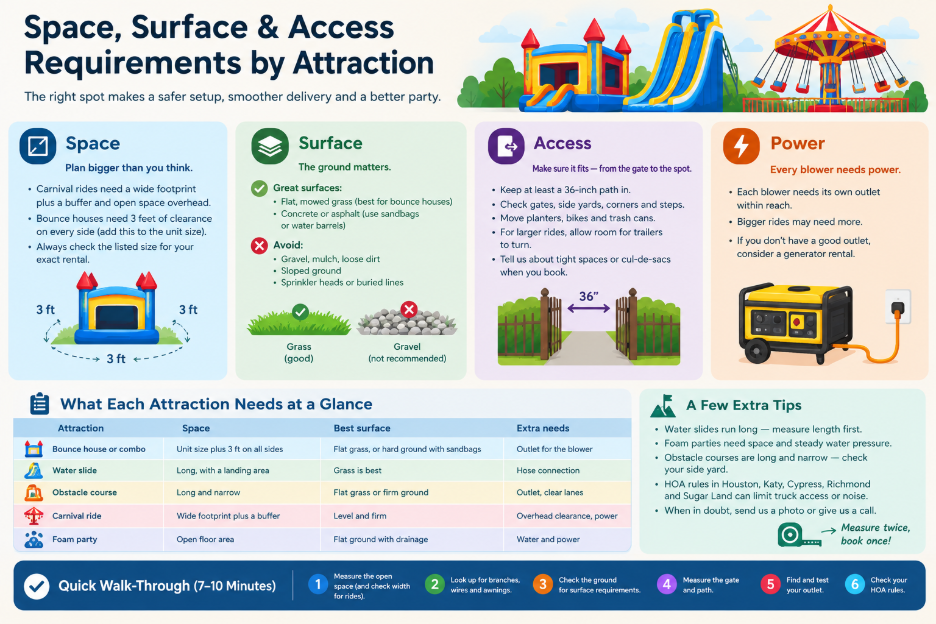
What Each Attraction Needs at a Glance
| Attraction | Space | Best surface | Extra needs |
| Bounce house or combo | Unit size plus 3 ft on all sides | Flat grass, or hard ground with sandbags | Outlet for the blower |
| Water slide | Long, with a landing area | Grass is best | Hose connection |
| Obstacle course | Long and narrow | Flat grass or firm ground | Outlet, clear lanes |
| Carnival ride | Wide footprint plus a buffer | Level and firm | Overhead clearance, power |
| Foam party | Open floor area | Flat ground with drainage | Water and power |
Use this as a starting point. The product page always has the final say.
Water Slides, Foam and Obstacle Courses
Slides and courses run long. A water slide rental can stretch past 30 feet once you count the splash pool. So measure length first, then width.
Water needs a landing spot, too. Grass drinks it up. Concrete gets slick. If you’re setting up on a hard surface, plan a dry zone for shoes and towels.
Foam party rentals need open space and steady water pressure. Pick a spot where the runoff won’t flood a patio or a neighbor’s fence.
For lanes and races, look at our obstacle courses. They’re long and thin, so a narrow side yard can work if it’s flat and clear.
Access: The 36-Inch Problem
You can have the perfect lawn and still lose the rental. Why? The gate.
Deflated inflatables get rolled up and carried in. If the path is under 36 inches wide, the unit may not fit. Check gates, side yards, tight corners and steps. Move planters, bikes and trash cans out of the way.
Big rides add another layer. They can arrive on trailers, and trailers need room to turn. A narrow cul-de-sac or a tight driveway can slow things down. Tell us about it when you book.
We serve Houston, Katy, Cypress, Richmond and Sugar Land. HOA neighborhoods in those areas sometimes limit truck access or noise. A quick call to your HOA now beats a canceled setup later.
Don’t Forget Power
Space and surface get all the attention. Power quietly ruins more parties.
Every blower needs its own outlet within reach. Bigger rides may need more. If your yard has no good outlet, or if you’re running several attractions, add a generator rental to your order. The power post linked above covers cords, circuits and generator sizing in detail.
Your Ten-Minute Walk-Through
A week before the event, do this:
- Measure the open space. For rides, compare it to the listed width for carnival rides, plus a buffer.
- Look up. Check branches, wires and awnings.
- Check the ground against the surface requirements for a bounce house: flat, no rocks, no mulch, no sprinklers.
- Measure the gate and the path to the setup spot.
- Find your outlet, and test it.
- Check your HOA rules.
Still unsure about something? Skip the guesswork and contact our team. We’d much rather answer questions on Tuesday than solve problems on Saturday.
And here’s the honest take: measure twice, book once. Your guests will only remember the fun.
Frequently Asked Questions
What is the width for carnival rides?
It depends on the ride. Most need a much wider footprint than a bounce house, plus a buffer zone, a queue area and open space overhead. Check the width on the ride’s product page, and call us if you’re close on space.
What are the surface requirements for a bounce house?
The best surface is flat, mowed grass, because stakes hold well in it. Concrete and asphalt also work with sandbags or water barrels. Gravel, mulch and sloped ground usually don’t.
How much space do I need for a bounce house?
Measure the unit, then add at least 3 feet on every side. A 15×15 bounce house needs about a 20×20 area, which leaves room for stakes, the blower and safe entry.
Can you put a bounce house on concrete?
Yes. Concrete and asphalt both work. We anchor the unit with sandbags or water barrels instead of stakes, so leave a little extra room around it.