


John Scurlock, a Louisiana engineer, invented the first bounce house in 1959. He was testing inflatable covers for tennis courts, not toys. His workers started jumping on them, and he saw a new idea. His first version, the “Space Pillow,” was a flat air cushion. Walls, nets, and roofs came later.
Picture a kid flying through the air inside a bounce house. Pure joy. Now picture an engineer in Louisiana, staring at a giant plastic cover for a tennis court. That’s where this story starts.
Nobody planned a toy. Scurlock wanted a cheap roof for tennis courts, and his crew had other plans. The tale is odd. It also helps you spot a safe unit. Every modern bounce house rental traces back to that tennis court test.
A Tennis Cover Turns Into a Space Pillow
Scurlock worked with air-held covers. Air pressure alone kept them up. No poles. No beams. Just sealed skin and a fan.
In 1959 he was testing inflatable covers for tennis courts. Then his employees found them. They hopped on during breaks, fell over, laughed, and bounced right back up.
Scurlock paid attention. He could keep selling covers. Or he could build what his crew loved more. He chose the second path and made a flat air cushion for jumping. His family called it the Space Pillow. It had no walls and no roof, so kids simply bounced on top.
The name came from the space race. With NASA all over the news, anything “space” sold. The family later opened a firm called Space Walk, and the product took that name too. Some people still say “moonwalk.” Same idea, different label.
Fairs First, Birthday Parties Later
Early air toys showed up at fairs, carnivals, and school events across the South. They felt like a sideshow, not a party staple.
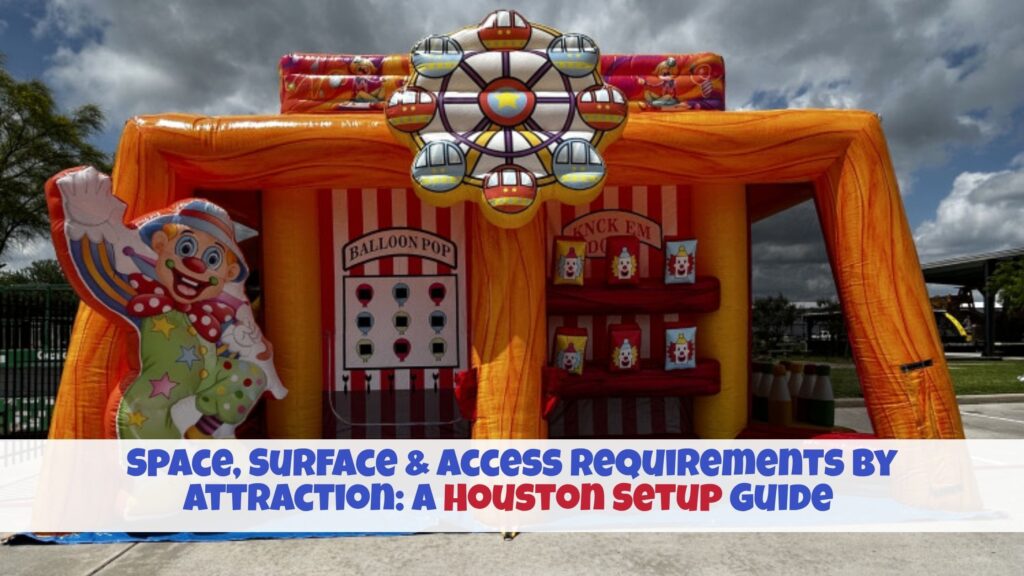
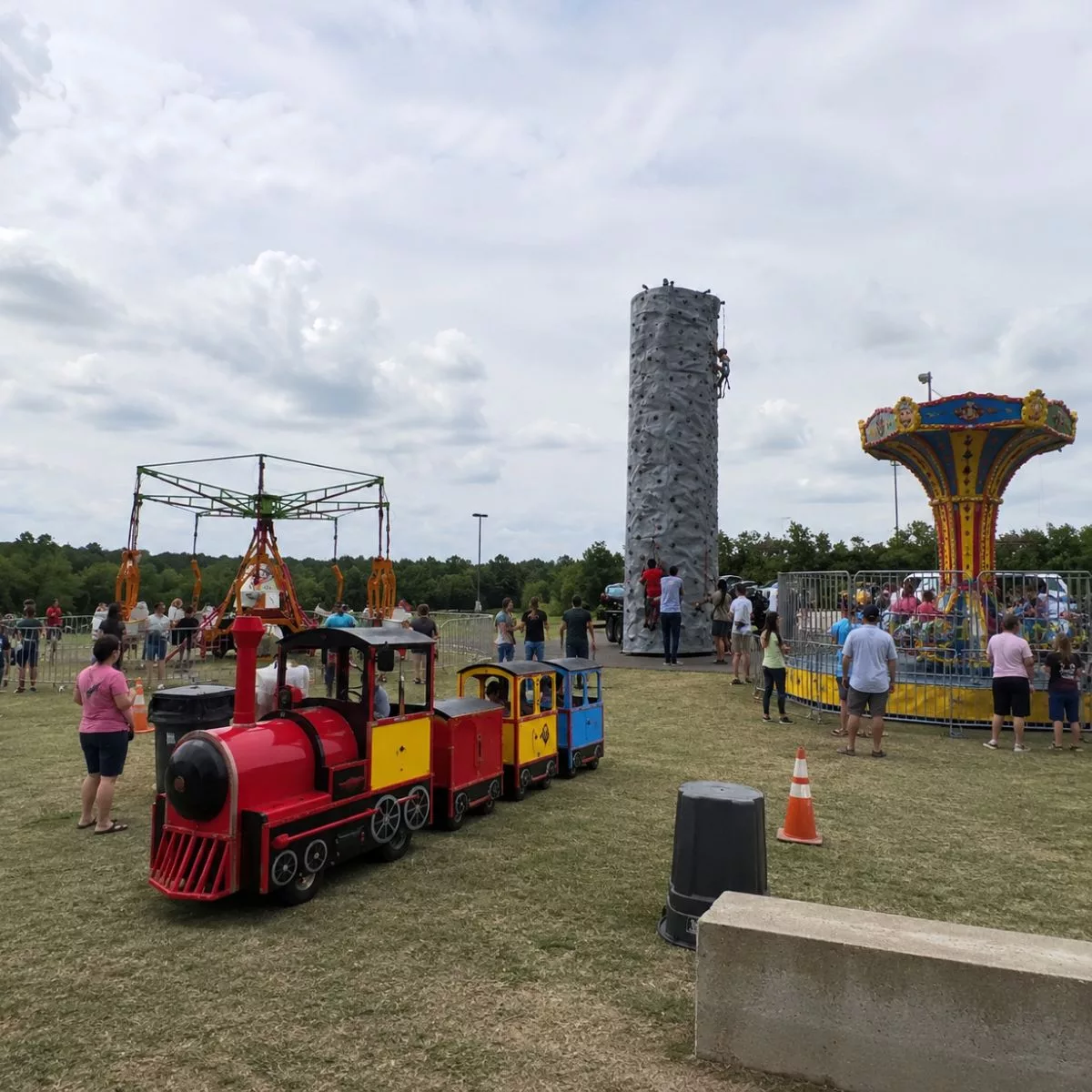
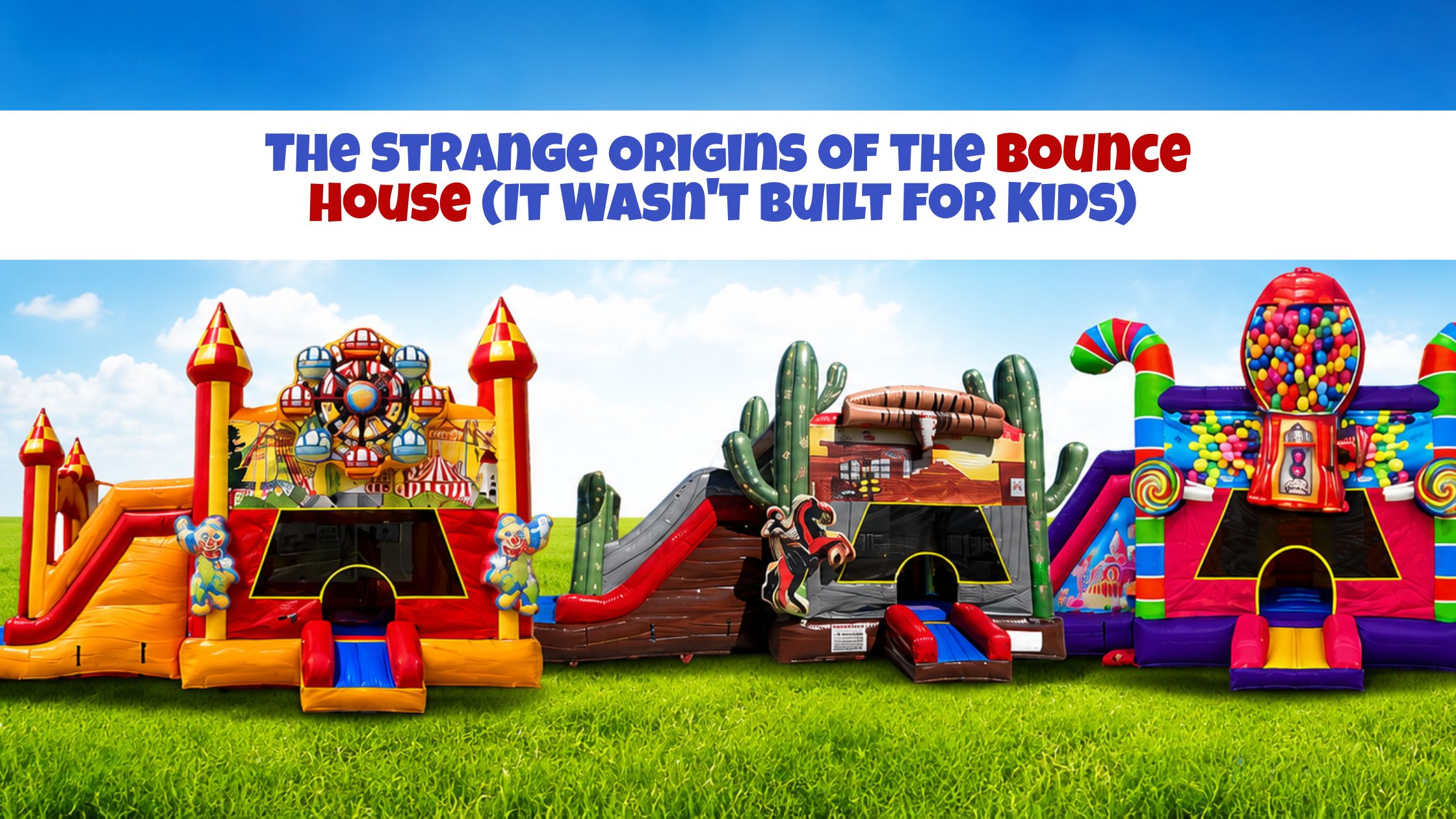
That fair energy never left. Our carnival ride rentals still pull a crowd the same way. So does the Big Top Combo, which winks at the old carnival tent.

Walls, Nets, and Roofs Came Later
The first cushions had no sides, and kids rolled off. Designers fixed that with columns, mesh nets, and then a roof. Sources differ on dates. Most place the walled design between the late 1960s and the 1970s.
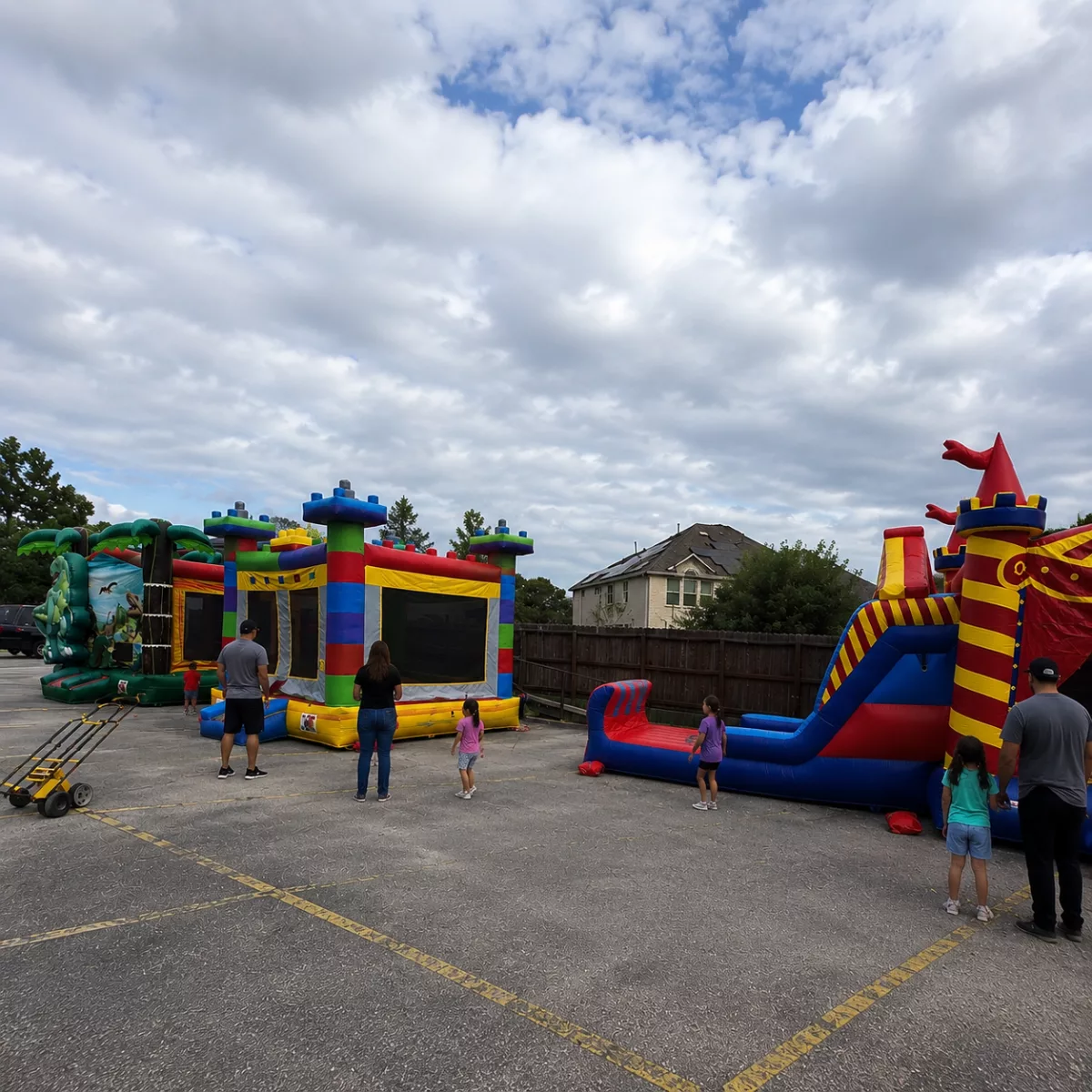
Safety rules came even later. Weight limits, blower standards, and anchor rules followed as rental firms grew and insurers stepped in. Shapes changed too. Castles, slides, and themed combos replaced the plain pillow. Want to know what covers your event? Read our rental insurance details.
Why This History Matters When You Rent
A bounce house is not a pool toy. It comes from real engineering. Air, seams, and fabric must work as a team.
Good units have strong seams, mesh panels for airflow, and thick stitching. Cheap thin vinyl skips all that. Air leaks out. Walls sag. The fun ends early.
Before you book, ask three things. How big is the blower? How are the seams built? How often is each unit inspected? A solid company answers fast. Our rental FAQs and setup guide show what to expect on delivery day.
One Idea, a Whole Party Lineup
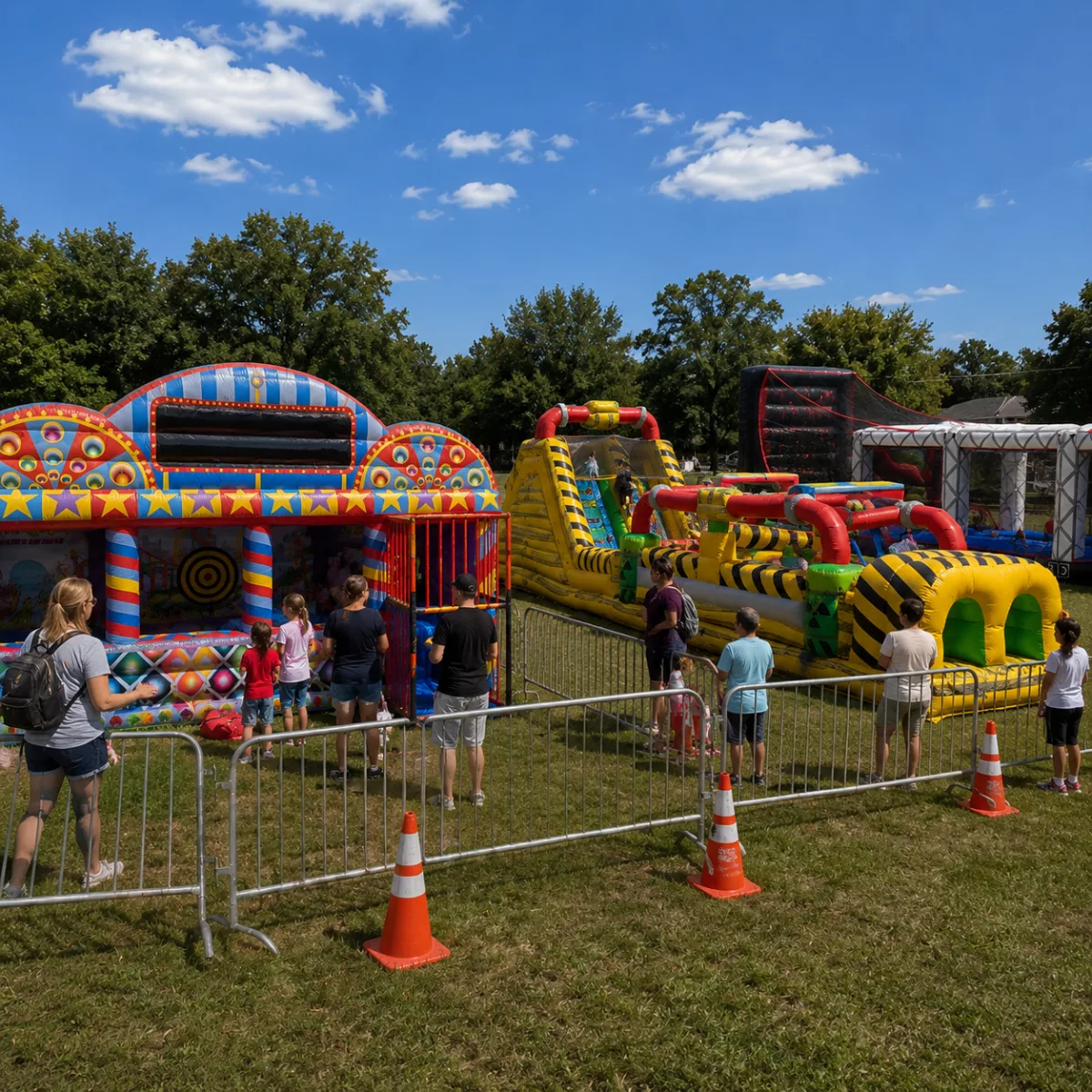
Every inflatable today is a cousin of the Space Pillow. Water slide rentals use the same air trick, with a wet slope on top. Obstacle course rentals stretch the idea sideways into tunnels, climbs, and slides.
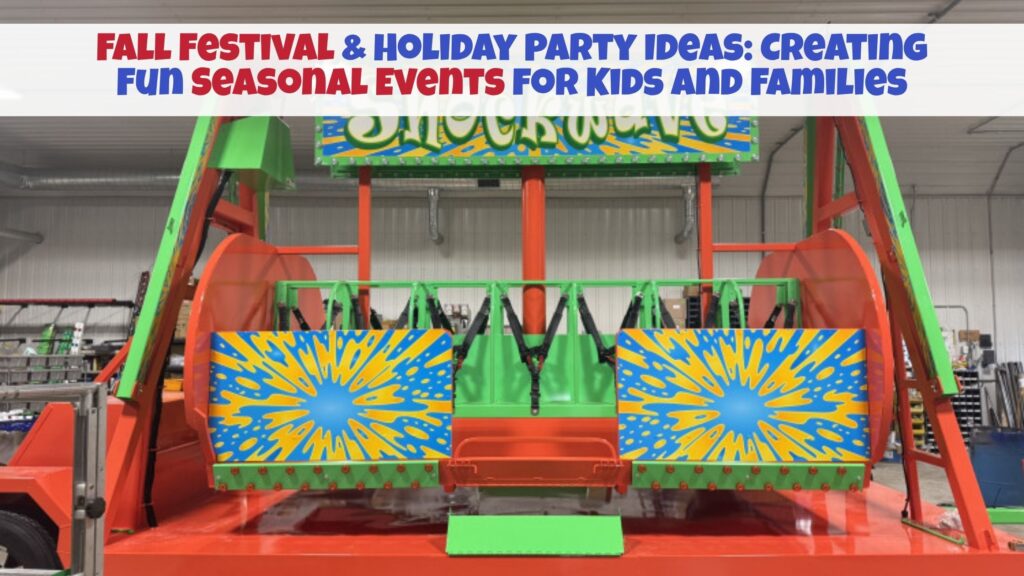
Even mechanical rides come from that same fair circuit. Add foam party rentals and you get a yard no 1960s fairgoer would know. The pull is the same. People love to bounce, slide, and get a bit messy together.
Pick the Unit, Not the Cartoon
Skip the bright artwork for a second. Check the seams, the blower, and the anchors. If the staff shrugs, walk away.
We’re a family-owned rental team in Houston. See our delivery areas to check your address, then request a quote when you’re ready. Want more stories like this? Browse our party planning blog.
Strong seams. Steady air. That’s the recipe.
FAQs
1. Who invented the bounce house?
John Scurlock, a Louisiana engineer, gets the credit. He had the idea in 1959 while testing air covers for tennis courts.
2. Was the bounce house invented as a toy?
No. It began as a cover for tennis courts. It became a toy when Scurlock’s staff started jumping on the tests for fun.
3. What was the first bounce house called?
The first version was the “Space Pillow.” It was a flat air cushion with no walls or roof. Later versions took the “Space Walk” name.
4. Why is a bounce house called a moonwalk?
The name comes from the space race. NASA was huge in the 1960s, so names like Space Walk and moonwalk caught on fast.
5. Are modern bounce houses safer than early ones?
Yes. Today’s units add strong stitching, mesh walls, weight limits, anchor rules, and blower standards. The first cushions had none of these.